Heavy legs: causes, symptoms, natural solutions, and when should you be concerned?
Share
The sensation of heavy legs is a very common circulatory discomfort, often felt at the end of the day. It manifests as a feeling of heaviness, fatigue, or tension in the lower limbs. Some people describe their legs as "heavy," "full," sometimes swollen, with a diffuse sensation of warmth or an instinctive need to sit down and elevate them.
This circulatory discomfort affects a large part of the population, regardless of age, sex, or lifestyle. It concerns active people as well as those who sit for long periods, athletes, seniors, or those who work standing up.
While generally benign, it can become bothersome when it occurs recurrently, sometimes causing legitimate concerns.
Understanding the mechanisms involved, recognizing what is normal, and identifying situations requiring medical advice allows one to both feel reassured and adopt the right habits. Fortunately, there are many natural solutions and simple habits to improve circulation and regain a sensation of lighter legs.
What exactly is the sensation of heavy legs?
The sensation of heavy legs is most often linked to a slowing of venous return from the lower limbs. Venous blood must flow from the legs back to the heart, a journey that occurs against gravity. Unlike arterial circulation, which is propelled by the heart, venous return relies on several complementary mechanisms.
The leg muscles play an essential role: with every movement, their contraction compresses the veins and promotes blood flow back to the heart. Veins are also equipped with valves, which prevent blood from flowing backward. Finally, the tone of the venous walls helps maintain fluid circulation.
When these mechanisms are less effective or overstressed, blood can circulate more slowly and tend to stagnate in the lower limbs. This stagnation causes the sensation of heaviness, fatigue, or discomfort felt in the legs.
It is important to note that heavy legs do not constitute a disease in themselves. They most often correspond to a functional imbalance of venous circulation, influenced by lifestyle, environment, and certain individual factors.
Why are the legs particularly affected by circulatory problems?
The lower limbs are particularly exposed to circulatory problems for several reasons. Their distance from the heart makes venous return more demanding. In addition, they support body weight and are constantly solicited in daily activities.
Prolonged standing promotes blood stagnation, as does immobile sitting. Conversely, movement stimulates the muscle pump and facilitates circulation.
This is why the sensation of heavy legs often appears at the end of the day, when the legs have been used for long hours.
What are the main causes of heavy legs?
The sensation of heavy legs is generally multifactorial. Several elements can combine and accentuate venous discomfort.
Immobility and prolonged postures
Remaining seated or standing for long periods without moving limits the action of the leg muscles. Teleworking, prolonged travel, jobs requiring continuous standing, or long periods in front of a screen lead to fatigue of the lower limbs.
Heat and seasonal variations
Heat causes blood vessels to dilate, which can decrease venous tone and complicate blood return to the heart. Sensations of heavy legs are often more pronounced in summer or during hot weather.
Hormonal variations
Hormones influence the flexibility and tone of venous walls. Certain periods of life, such as pregnancy, the menstrual cycle, or menopause, can accentuate circulatory discomfort.
Lack of physical activity or inappropriate activity
Insufficient physical activity limits the natural stimulation of circulation. Conversely, activity that is too intense or poorly adapted can also tire the legs and accentuate the sensation of heaviness.
Individual predispositions
Some people have a familial venous fragility. In this case, the legs may be more sensitive to circulatory fatigue, even in the absence of major triggers.
What symptoms can accompany the sensation of heavy legs?
The manifestations of venous discomfort vary depending on the person and the period. The most frequently reported symptoms are:
- sensation of heaviness or tension in the legs
- fatigue accumulates at the end of the day
- swelling of the ankles or calves
- feeling of warmth or diffuse discomfort
- tingling
- frequent need to lie down or elevate the legs.
These signs are generally reversible and lessen with rest or simple measures. In case of persistent or unusual symptoms, medical advice is recommended.
When should one worry about heavy legs?
In the majority of cases, the sensation of heavy legs is benign and functional. It is often linked to lifestyle, heat, immobility, or hormonal variations. It generally subsides with rest, movement, or simple comfort measures.
However, certain situations warrant special attention.
Heavy Legs: What is Generally Considered Normal
It is common to feel a sensation of heaviness in the legs:
- at the end of the day,
- in hot weather,
- after a long period of sitting or standing,
- during certain hormonal periods,
- in case of temporary fatigue.
In these cases, the discomfort disappears or lessens with:
- rest,
- elevating the legs,
- movement,
- applying cold water.
These situations most often correspond to a temporary imbalance in venous circulation.
When to consult a healthcare professional?
It is recommended to seek medical advice if the sensation of heavy legs:
- becomes persistent or worsens over time,
- is accompanied by significant pain,
- is associated with sudden or asymmetrical swelling,
- is accompanied by redness, local heat, or unusual pain,
- appears suddenly without an identifiable trigger.
These signs are not always serious, but they require professional advice to rule out any underlying cause requiring specific management.
Why this distinction is important
Understanding what is normal and what should prompt a consultation allows you to:
- avoid unnecessary worry,
- avoid self-diagnosis,
- adopt the right reflexes at the right time.
In the majority of cases, heavy legs are due to common circulatory discomfort, which can be improved with natural solutions and a healthy lifestyle.
Heavy Legs and Impact on Quality of Life
Even when benign, heavy legs can affect daily comfort. They can reduce the desire to move, make certain activities more arduous, and alter the feeling of well-being at the end of the day.
Addressing this discomfort and acting at the first signs helps maintain a good quality of life and prevent the sensation of heaviness from becoming long-lasting.
What natural solutions are there to improve circulatory comfort?
Managing heavy legs relies on a global approach, combining movement, lifestyle, and simple actions.
Move regularly
Movement is one of the best allies for venous circulation. Walking, swimming, cycling, or gentle practices like yoga activate leg muscles and support venous return. Moderate and regular activity is often enough to improve the feeling of lightness.
Avoid prolonged immobility
Standing up regularly, walking for a few minutes, or mobilizing ankles and calves helps stimulate blood circulation.
Use cold water
Cold water is traditionally used to tone blood vessels. A jet of cold water applied to the legs, from bottom to top, can provide a quick sense of relief.
Elevate your legs
Elevating your legs at the end of the day facilitates venous return and promotes relaxation of the lower limbs.
Adapt your diet
A balanced diet, combined with good hydration, supports circulatory function. Limiting excess salt can help reduce the feeling of swelling.
Plants traditionally used for leg comfort
The use of plants to support venous circulation is not new. For centuries, certain plant species have been incorporated into traditional practices to promote a feeling of lightness in the legs, especially during periods of fatigue, prolonged standing, or heat.
These plants do not act as medicines, but are used to support circulatory comfort and support normal physiological functions related to venous return.
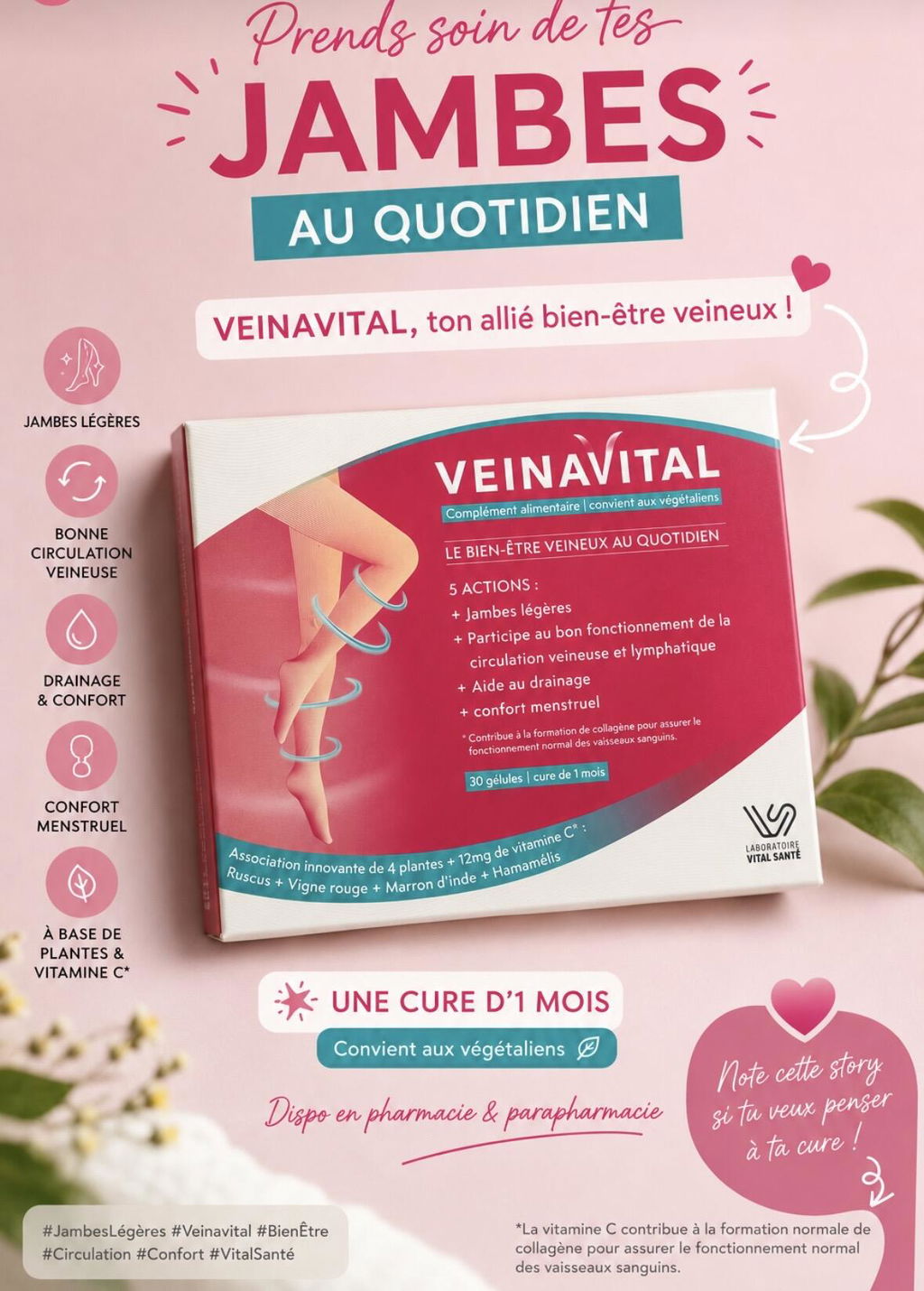
Horse chestnut: an emblematic plant for circulation
Horse chestnut is one of the best-known plants in this field. It is traditionally used to support venous comfort and promote the sensation of lighter legs, particularly during periods of circulatory fatigue.
Red vine: an ally for tired legs
Red vine is renowned for its leaves rich in compounds naturally present in the plant. It is traditionally used to contribute to circulatory comfort and to support people experiencing a sensation of heaviness or fatigue in their legs.
It is often included in formulas dedicated to circulation, particularly during periods when the legs are more stressed, such as in summer or during prolonged standing.
Butcher's broom: traditional support for venous return
Butcher's broom is a plant that has long been used for circulatory comfort. It is traditionally associated with supporting venous return and the sensation of lighter legs.
In traditional practices, butcher's broom is often recommended when the circulation in the lower limbs is under severe strain, for example during long days spent standing or sitting.
Witch hazel: plant for circulatory balance
Witch hazel is a plant known for its traditional use in leg comfort. It is valued for supporting the tone of small vessels and contributing to the sensation of circulatory comfort.
It is frequently combined with other plants in formulas dedicated to heavy legs, in order to offer a global and complementary approach.
Why combine several plants in a formula?
Each plant has its specificities. Combining them allows for:
- covering different aspects of circulatory comfort,
- offering complementary action,
- being part of a global and balanced approach.
This is why circulation-specific formulas often combine several plants traditionally recognized for their use in venous comfort.
Food supplements and heavy legs: how to integrate them?
Food supplements can be part of a global wellness approach, complementing a varied diet and a healthy lifestyle. They are not an isolated solution, but additional support.
When to consider a supplement for circulation?
They can be considered:
- during hot weather,
- during prolonged standing or sitting,
- in case of temporary leg fatigue,
- for people prone to a recurring sensation of heavy legs.
How to choose a suitable food supplement?
Several criteria are important:
- the quality and origin of the plant extracts,
- the coherence of the plant combination,
- transparency regarding the composition,
- adherence to appropriate dosages,
- regularity of intake.
Supplements yield better results when combined with good lifestyle habits.
Complementary natural solutions for daily life
Beyond plants and food supplements, certain natural solutions can enhance the feeling of lightness when incorporated into daily life.
Self-massage
Leg massages, performed from bottom to top, can promote relaxation and support venous return. They can be done with or without oil, at the end of the day.
Compression stockings and socks
In some cases, wearing compression stockings or socks can contribute to leg comfort, particularly during prolonged standing or travel.
Active breaks
Incorporating active breaks throughout the day helps to restart circulation. A few minutes of walking or joint mobilization are often enough to reduce the sensation of heaviness.
Regularity above all
Whatever solution is chosen, regularity is essential. The benefits on the sensation of heavy legs are long-term and rely on consistent good habits.
Preventing the sensation of heavy legs long-term
Preventing the onset of heavy legs relies on simple daily actions: regular movement, avoiding prolonged immobility, adapting habits, and listening to your body's signals.
Taking care of your circulation helps maintain leg comfort and lightness in the long term.
Key takeaways
- The sensation of heavy legs is common and related to the functioning of venous circulation.
- Immobility, heat, hormones, and predispositions can contribute to this discomfort.
- Simple natural solutions exist to improve the feeling of lightness.
- In most cases, the situation is benign, but certain signs require medical advice.