Heavy legs in summer: why heat makes your veins worse (and what to do about it)
Share
Why your legs feel heavy as soon as the weather gets hot
Here's a figure that deserves your attention: every additional degree Celsius of body temperature dilates the femoral vein by 10.9%. The sensation of heavy legs in summer is a measurable physiological phenomenon, documented by international scientific publications, and not just a subjective impression.
In France, 18 million people suffer from venous insufficiency, according to Inserm data. Approximately 1 in 3 adults experience heavy leg symptoms every summer: swelling, cramps, and that characteristic heaviness that sets in with the first heatwaves.
In this article, we'll explain what really happens in your veins when the thermometer rises, identify the aggravating factors specific to the summer season, propose a concrete morning-day-evening protocol, and help you recognize the warning signs that require a medical consultation.
What really happens in your veins when it's hot
Your body is a remarkable thermoregulatory machine. When the outside temperature increases, your blood vessels dilate to dissipate body heat towards the skin's surface: this is thermal vasodilation. This perfectly normal survival mechanism has a direct side effect: it slows down venous return in the lower limbs.
Data published in scientific literature (PubMed/NCBI) confirm that the cross-sectional area of the femoral vein increases linearly with body temperature, at a rate of 10.9% per degree Celsius between 35 and 38 °C. Concretely, your veins become wider, blood circulates more slowly, and gravity does the rest.
To understand the impact, you need to know the three pillars of venous return:
- Anti-reflux valves: small flaps inside the veins that prevent blood from flowing back down.
- Calf muscle pump: with each contraction, the calf muscles compress the veins and propel blood upwards.
- Tone of venous walls: firm and elastic walls maintain an optimal caliber for circulation.
Heat weakens these three mechanisms simultaneously. Venous walls relax, valves no longer close properly, and inactivity due to heat reduces the action of the muscle pump.
Key point: heat is not a cause of venous insufficiency, but a major aggravating factor that intensifies local inflammation and increases the risk of valve obstruction. According to the Observatoire Veinocare 2025, the prevalence of venous symptoms increases by 20 to 30% during heatwaves.
With global warming, French summers are getting hotter and heatwaves are becoming more frequent. Prolonged exposure to these aggravating mechanisms is no longer a seasonal break of a few days: it now extends over several weeks, sometimes several months.
Summer aggravating factors you might not suspect
Heat alone doesn't explain everything. It's the combination of several typical summer factors that creates a cumulative effect on your venous circulation. Dehydration, sedentary lifestyle, altered diet: each of these elements amplifies the effects of thermal vasodilation.
Dehydration: when blood thickens
In summer, increased perspiration leads to often underestimated fluid loss. When the body lacks water, the blood thickens. Thicker blood circulates more difficulty in veins already dilated by heat, which causes increased stagnation in the lower limbs and even more swollen legs.
The minimum goal is to drink 1.5 to 2 liters of water per day, more during heatwaves or physical activity. Be careful of two summer false friends: alcohol, a vasodilator that aggravates venous dilation, and salty foods (appetizers, cold cuts, chips), which promote water retention and amplify swelling.
Summer sedentary lifestyle: the silent enemy of your veins
Paradoxically, holidays can be harmful to your circulation. Long hours lying on the beach, car or plane journeys, afternoons reading by the pool: all these situations paralyze the venous pump in the calf. Without regular muscle contraction, blood stagnates in the leg veins, causing venous stasis that worsens throughout the day.
Summer travel deserves special attention. A plane journey of more than four hours or a long car journey keeps the legs in a prolonged immobile position, a recognized risk factor for venous disorders.
An often overlooked detail: your shoes matter. Flat flip-flops, ubiquitous in summer, suppress the action of the plantar arch on the venous pump. Opt for shoes with a small heel of 2 to 3 cm, which naturally activate venous return with each step.
Summer diet: what you eat affects your veins
Summer offers privileged access to foods that naturally support venous tone. Red fruits (blueberries, cherries, strawberries) are rich in anthocyanins, pigments that strengthen capillary walls and reduce vascular permeability. Citrus fruits provide protective flavonoids. Green vegetables complete this picture with their contributions of essential vitamins and minerals for vascular integrity.
These nutrients act by strengthening the structure of venous walls and limiting micro-leaks of fluid responsible for edema.
Conversely, some foods worsen the situation: salt (which retains water), alcohol (vasodilator), and ultra-processed foods, which promote chronic inflammation. Reducing their consumption during the summer can make a noticeable difference to the comfort of your legs.
Your daily protocol to relieve your legs in summer
Heavy leg symptoms follow a predictable pattern: they are generally most intense in the late afternoon, as aggravating factors accumulate throughout the day (increasing heat, prolonged standing or sitting, progressive dehydration). That's why a structured approach, spread throughout the day, is more effective than an isolated action.
Morning: prepare your veins before the heat
If your doctor has prescribed medical compression stockings or socks, put them on as soon as you wake up, before your legs start to swell. The Haute Autorité de Santé (HAS) recognizes medical compression as the basic treatment for venous insufficiency. Its effectiveness is maximal when applied to still-thin legs in the morning.
Finish your shower with a jet of cold water on your legs, moving slowly upwards from your feet to your thighs. This simple gesture stimulates the contraction of venous walls and reactivates venous return.
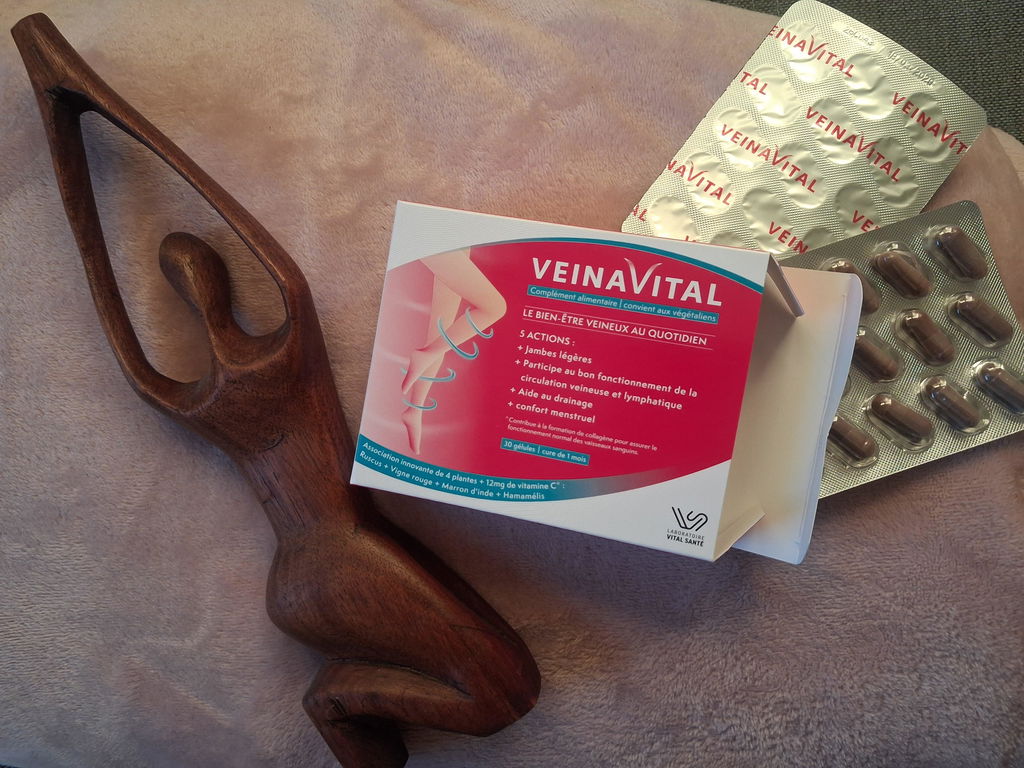
It's also a good time to take a venotonic supplement with a large glass of water. Regular intake, every morning, is a key factor in the long-term effectiveness of a summer course.
Finally, choose your shoes carefully: a small heel of 2 to 3 cm activates the plantar pump much better than flat flip-flops.
During the day: keep circulation active
Walk at least 30 minutes a day, preferably early in the morning or in the evening, outside of peak heat hours. Walking is the most effective exercise to activate the calf muscle pump and restart venous return.
In situations of forced sedentary lifestyle (office, car, plane), a few simple exercises make a real difference: ankle rotations, foot flexions and extensions, calf raises. Repeat these movements every 30 to 45 minutes.
Hydrate regularly throughout the day, aiming for 1.5 to 2 liters of water. Limit alcohol and salty foods, especially at lunchtime.
Avoid direct sun exposure on the legs, hot baths, and saunas. Any additional heat source accentuates vasodilation and aggravates symptoms.
Evening and night: recover and decongest
At the end of the day, elevate your legs for 15 to 20 minutes, 15-20 cm above heart level. Gravity then becomes your ally: it facilitates the return of venous blood to the heart and reduces accumulated swelling.
Before going to bed, a cold shower on the legs or a foot bath in cool water helps constrict the veins and relieve the feeling of heaviness.
An often overlooked aspect: the nocturnal dimension. In summer, heat combined with venous discomfort frequently disrupts sleep. Keep your room as cool as possible and slightly elevate the foot of your bed (a few centimeters are enough) to promote venous drainage during the night.
The benefit of a course of venotonic supplements is measured over time. Start as soon as the first heat arrives and maintain intake throughout the summer for optimal benefit.
Venotonic plant actives: what science says
In 2026, 61% of French people consume food supplements. Demand for scientifically documented plant actives is growing rapidly. In the field of venous circulation, three plants stand out for the strength of their scientific evidence.
Red vine: the scientific reference
Red vine (Vitis vinifera) is the most well-documented venotonic plant in scientific literature. Its leaves concentrate anthocyanins and flavonoids that act on three levels: they strengthen capillary walls, inhibit enzymes responsible for vein degradation, and reduce vascular permeability which causes edema.
Concretely, these active ingredients help maintain firmer venous walls and limit fluid leakage into surrounding tissues. At Vital Santé, red vine active ingredients are naturally sourced and non-GMO, in line with our commitments to European traceability.
Horse chestnut: the most clinically studied
Horse chestnut is the plant-based venotonic active ingredient that has been the subject of the greatest number of clinical studies. Its active principle, aescin, has a documented triple action: anti-inflammatory, vasoconstrictive, and venotonic.
Aescin acts by reducing capillary permeability and limiting fluid accumulation in tissues. Clinical studies show a significant reduction in edema and the sensation of heaviness in people suffering from venous insufficiency. It is a choice active ingredient for periods of high heat, when symptoms intensify.
Witch hazel: recognized by the European Medicines Agency
Witch hazel benefits from official recognition by the EMA (European Medicines Agency) for traditional use in relieving minor symptoms of venous insufficiency. This European institutional validation is a guarantee of seriousness for consumers and healthcare professionals.
Its action primarily focuses on the tone of venous walls, helping to maintain a venous caliber adapted to efficient circulation. This recognition by the EMA confirms that witch hazel is not just a "grandmother's remedy" but an active ingredient whose efficacy and safety profile has been evaluated by a regulatory authority.
When to consult a doctor: warning signs not to ignore
Most symptoms of heavy legs in summer are benign: a feeling of heaviness at the end of the day, slight ankle swelling, occasional nocturnal cramps. These manifestations, although unpleasant, generally respond to the measures described in this article.
However, certain signs require rapid medical consultation, as they may indicate phlebitis or deep vein thrombosis:
- Localized redness and warmth along a vein
- Intense, continuous pain along a specific vein path
- Asymmetrical swelling of only one limb (one leg significantly more swollen than the other)
- Sensation of a hard, painful cord under the skin
These symptoms should never be trivialized. In France, over 62,000 patients were hospitalized in 2022 for venous thromboembolic disease, including 48,000 for pulmonary embolism. These figures remind us that venous insufficiency can have serious consequences if not treated.
Certain profiles have an increased risk: pregnant women, overweight individuals, seniors, workers who stand for long periods, and long-distance travelers. Women are also nearly twice as affected as men by venous insufficiency.
A striking figure: 1 in 4 patients believes there is little they can do to improve their circulation. This is incorrect. Solutions exist, and a personalized venous assessment with your doctor or pharmacist is the first step to identifying them.
What you can do today for your legs
80% of French people have at least one recognized venous risk factor. Prevention is not limited to already diagnosed individuals: it concerns the vast majority of us.
The key actions consist of five pillars:
- Hydration: 1.5 to 2 liters of water per day, more during heatwaves.
- Movement: 30 minutes of daily walking and ankle exercises in case of forced sedentary lifestyle.
- Compression: medical compression stockings or socks put on in the morning.
- Diet: red fruits, citrus fruits, green vegetables; less salt, less alcohol.
- Documented plant actives: red vine, horse chestnut, witch hazel, as a regular course throughout the summer.
Don't wait for symptoms to worsen to act. Preventive measures are all the more effective when implemented early in the season.
Natural, scientifically documented solutions available in pharmacies exist to help you have a lighter summer. At Vital Santé, our formulas are co-developed with specialist doctors and have been available in pharmacies for over 20 years. Our customers give them an average rating of 4.81/5 based on 323 reviews. Pharmaceutical rigor and natural active ingredients are not incompatible.
Talk to your pharmacist. Your legs deserve a summer without heaviness.