Chronic venous insufficiency: understanding the disease, recognizing its symptoms, and getting lighter legs
In France, venous insufficiency is estimated to affect around 18 million people, or nearly one in three adults — yet, one in six French people still consider it merely a cosmetic concern rather than a genuine illness. Heavy legs at the end of the day, swollen ankles, small veins appearing under the skin: these signs, often attributed to heat or fatigue, actually indicate a precise and progressive disorder of circulation in the legs.
Contrary to popular belief, chronic venous insufficiency is not just about appearance. Left untreated, it progresses in stages and can, in its most advanced forms, lead to lasting pain, skin changes, or wounds that are difficult to heal. Conversely, if detected early, it responds well to management that slows its progression and restores daily comfort.
This guide addresses, in order, the questions that arise when legs become heavy or varicose veins appear: how venous circulation works, why this system malfunctions, how to recognize and classify symptoms, when to consult a doctor, and what solutions—from daily habits to medical treatments—can truly help.
Summary
• How does blood return from the legs to the heart?
• Why do some people develop chronic venous insufficiency?
• What are the symptoms of chronic venous insufficiency?
• Stages of chronic venous insufficiency: from CEAP classification to venous ulcer
• Why do symptoms vary from day to day? Aggravating factors
• How to relieve and treat chronic venous insufficiency?
• What is the impact of chronic venous insufficiency on quality of life?
• Glossary: words related to chronic venous insufficiency
• Frequently asked questions about chronic venous insufficiency
To understand what happens in venous insufficiency, we must first look at how blood normally travels through the legs—a journey much more demanding than anywhere else in the body.
A one-way trip, a complicated return
The heart sends oxygenated blood to the legs via arteries, under pressure it generates with each beat. The return is an entirely different matter: once it reaches the feet, this same blood must travel back to the heart, sometimes over a meter, without the direct aid of the cardiac pump and against gravity. This return journey is the role of the veins—and it is precisely this system that venous insufficiency disrupts.
To compensate for the lack of propulsive pressure, the body relies on two complementary mechanisms: a system of valves inside the veins, and a muscular pump in the calf.
Venous valves, anti-reflux valves
The leg veins are equipped with small valves called valvules. Like the anti-reflux valves in a plumbing system, they open to allow blood to flow upwards, then immediately close to prevent it from falling back down due to gravity. Step by step, blood thus progresses towards the heart without ever receding—as long as these valves remain competent.

The calf, a second heart pump
With each step, the calf muscles contract and compress the deep veins of the leg, much like squeezing a tube to make its contents rise. This movement mechanically pushes blood upwards; the valves, in turn, prevent it from falling back down between contractions. This association earns the calf its nickname as the "second heart" of the legs and explains why walking remains, even today, one of the best habits for circulation. Conversely, remaining immobile for long periods, whether sitting or standing, deprives this pump of its fuel: blood stagnates, and the first symptoms can appear or intensify.

When this system malfunctions: from reflux to venous insufficiency
Chronic venous insufficiency (CVI) occurs when one of these two mechanisms—valves or muscular pump—becomes less effective, or when the vein wall itself distends and loses its tone. The scenario then unfolds, most often over several years, in a fairly consistent sequence:
1. The valves do not close properly, or the venous walls relax.
2. Part of the blood, instead of flowing upwards, falls back down: this is venous reflux.
3. This blood accumulates and stagnates in the leg veins, which gradually dilate under pressure.
4. The pressure inside the veins increases permanently—doctors refer to this as chronic venous hypertension.
5. This overpressure forces some blood fluid through the walls of small vessels into the surrounding tissues: this is the origin of swelling (edema).
6. Chronic local inflammation sets in, causing pain, itching, and eventually, skin changes.
It is this mechanism, and this alone, that explains most of the symptoms detailed later in this article—from the simple sensation of heavy legs to the most advanced complications.

|
Key takeaway Venous circulation in the legs relies on two mechanisms: valves that prevent blood from flowing downwards, and a muscular pump (the calf) that pushes it upwards with each step. Chronic venous insufficiency occurs when one of these mechanisms weakens, leading to blood reflux, excessive venous pressure, and then the symptoms associated with the disease. |
Why do some people develop chronic venous insufficiency?
There is no single cause of chronic venous insufficiency, but rather a combination of factors that, when combined, progressively weaken the veins and their valves. Some are inherited or age-related and cannot be changed; others are related to lifestyle and can, at least in part, be corrected.
Heredity, the primary risk factor
Having a close relative—father, mother, brother, or sister—affected by varicose veins or venous insufficiency significantly increases the risk of developing it oneself. This predisposition may be related to a hereditary fragility of the connective tissue that makes up the vein walls, as well as naturally less efficient valves. It does not make the disease inevitable, but it justifies increased vigilance regarding other risk factors.
Age: tissues that lose elasticity
The prevalence of venous insufficiency increases significantly with age: it affects approximately 15% of adults aged 35, compared to nearly two-thirds of the population over 70. This gradient is explained by the natural aging of the venous wall, which loses elasticity, and by a progressive weakening of the calf muscles as physical activity decreases with age.
Hormones and pregnancy
Women develop venous insufficiency significantly more often than men. Estrogen and progesterone directly influence the tone of the venous walls, and certain periods of life amplify this effect: during pregnancy, blood volume increases while the uterus compresses the large veins of the pelvis, which explains the frequent appearance of heavy legs, edema, or varicose veins at that time. These symptoms often subside after childbirth but can persist, particularly after several pregnancies.
Occupations and postures that immobilize the legs
The calf muscle pump needs movement to function: standing or sitting still for long hours causes it to stop working and allows blood to stagnate. This is why certain professions — healthcare workers, hairdressers, teachers, salespersons, waiters, cashiers, security guards, or office workers who sit all day — have an increased risk. Regardless of the profession, general sedentary behavior also reduces calf muscle activity and ultimately promotes the onset of the disease. To learn more, discover how to relieve heavy legs after a day's work.
Overweight
Excess weight exerts additional mechanical pressure on the veins of the pelvis and legs, which complicates the return of blood to the heart. A reference study thus showed that a body mass index between 25 and 27 was associated with an increased risk of varicose veins of about 29%. Overweight is also frequently accompanied by reduced physical activity, which further aggravates the phenomenon.
Smoking
More known for its effects on arteries, smoking also contributes to chronic inflammation and oxidative stress of blood vessels, which can weaken a venous system already challenged by other factors.
Medical history and associated pathologies
More rarely, a history of deep vein thrombosis, certain congenital abnormalities of the veins, trauma to the lower limbs, or certain connective tissue diseases can promote or worsen venous insufficiency. These situations warrant specific medical monitoring.
Factors that add up rather than act alone
In practice, these factors rarely accumulate in equal parts: a woman with a family history, multiple pregnancies, a standing job, and slight overweight presents a significantly higher risk than if only one of these elements were present in isolation. This also explains the importance of acting on modifiable factors — physical activity, weight, time spent immobile — even in the presence of a hereditary predisposition.
What are the symptoms of chronic venous insufficiency?
The symptoms of venous insufficiency almost always develop gradually. Discreet at first — discomfort at the end of the day, more pronounced in summer — they become more frequent, more intense over time, and can eventually be present daily. They also do not occur in the same order or with the same intensity for everyone: some people will only experience heavy legs for years, while others will quickly develop varicose veins or edema.
Heavy legs, the earliest sign
This is generally the very first signal: a feeling of "lead" legs, fatigue, and tension in the calves that makes the end of the day difficult. It typically appears after several hours of standing or sitting, is exacerbated by high heat or after a long journey, and subsides with walking, elevating the legs, or taking a cool shower. Taken in isolation, occasional heavy legs are nothing alarming; when it becomes daily, it deserves to be evaluated. To delve deeper into this symptom, consult our guide on the causes, symptoms, and solutions for heavy legs.
Swelling (edema)
When pressure increases in the veins, part of the blood fluid passes through the walls of the small vessels and accumulates in the tissues: this is edema. It mainly affects the ankles, the top of the foot, and the lower legs, appears at the end of the day, and generally subsides after a night's rest — tighter shoes in the evening or a clearly visible sock mark are often the first signs. Edema that no longer disappears at rest warrants medical advice, as other causes (cardiac, renal, lymphatic) can also cause leg swelling. When the legs are painful to the touch, bruise easily, or show a characteristic disproportion, our article explains how to recognize lipedema and why medical advice remains necessary.
Pain, cramps and abnormal sensations
Venous insufficiency is not limited to a feeling of heaviness. It can also cause diffuse pain or throbbing, often worsened by heat and immobility; nocturnal calf cramps, for which venous circulation is only one possible cause among others; or tingling, prickling, and a need to move the legs, more pronounced after a period of immobility. Some people also describe a sensation of warmth, or even burning, around the ankles or behind the knees.
Itching and varicose veins
When circulation has been impaired for a long time, the skin can become more fragile and inflamed, causing itching — which should preferably not be scratched, at the risk of further weakening the skin. Varicose veins, meanwhile, are the most visible sign of the disease: they are dilated and tortuous veins, visible under the skin, most often on the calves, behind the knees, or on the inner side of the legs. Not all of them cause discomfort, but when accompanied by pain or swelling, they generally indicate more significant damage to the venous system.
Skin changes and ulcers: signs of advanced progression
After several years of progression without treatment, the skin of the ankles may turn brown (ochre dermatitis), thicken and harden (lipodermatosclerosis), or develop venous eczema. In the most advanced forms, a chronic wound — the venous ulcer — may appear near the ankle and heal with difficulty due to poor tissue oxygenation. Fortunately, this complication remains rare and mainly concerns advanced or long-neglected forms; it is detailed, along with the stages leading to it, in the next section.
|
Symptom |
What it feels like |
When it appears |
Mechanism |
|
Heavy legs |
Feeling of "lead" legs |
End of day, heat |
Blood stagnation |
|
Edema |
Swollen ankles and feet |
Evening, heat |
Fluid leakage into tissues |
|
Pain / cramps |
Throbbing, night cramps |
Rest, immobility |
Venous hypertension; multiple causes for cramps |
|
Tingling |
Prickling, urge to move |
After immobility |
Increased pressure in tissues |
|
Itching |
Urge to scratch |
More advanced stage |
Chronic skin inflammation |
|
Varicose veins |
Visible dilated veins |
Progressive evolution |
High and lasting venous pressure |
|
Ochre dermatitis |
Brownish patches on ankles |
Chronic evolution |
Blood pigment deposits |
The stages of chronic venous insufficiency: from CEAP classification to venous ulcer
To describe the severity of venous disease and adapt management, doctors rely on an international classification, the CEAP classification — an acronym that takes into account Clinical signs, Etiology (origin), Anatomy (affected veins), and Pathophysiology (the underlying mechanism). In routine practice, it is mainly the clinical scale, graded C0 to C6, that serves as a benchmark.
|
A useful nuance Strictly speaking, doctors sometimes reserve the term "chronic venous insufficiency" for advanced stages (C3 to C6), and use "chronic venous disease" to refer to the entire spectrum, including telangiectasias and varicose veins (C0 to C6). In common language, as in this article, "venous insufficiency" is used in a broad sense, to refer to the entire disease. |
• C0 — No visible signs. Legs appear normal, but some people already experience heaviness or discomfort at the end of the day. Diagnosis then relies on clinical examination and, if necessary, an echo-Doppler.
• C1 — Small visible vessels. Appearance of telangiectasias (fine red or bluish vessels) or reticular venules. Often perceived as a cosmetic problem, they can nevertheless be accompanied by symptoms.
• C2 — Varicose veins. Veins become significantly dilated and visible. Not all require immediate treatment, but they do warrant a medical evaluation to assess their impact.
• C3 — Edema. Persistent swelling of the legs develops, generally partially disappearing after a night's rest, especially in its early stages.
• C4 — Skin changes. Ochre dermatitis, venous eczema, or skin thickening (lipodermatosclerosis) indicate chronic tissue damage and require more attentive care.
• C5 — Healed ulcer. The wound has closed, but the risk of recurrence remains high without appropriate management of the underlying venous disease.
• C6 — Active venous ulcer. The most advanced stage: a chronic wound, most often near the ankle, that heals with difficulty due to persistent venous pressure and lack of tissue oxygenation. Management then combines treatment of the venous disease, medical compression, local care, and specialized follow-up.
Reassuringly: the vast majority of affected individuals never reach stages C5 or C6. Appropriate management, started early, usually allows the disease to be stabilized well before this point.
Other complications to be aware of
Two situations, distinct from the C0-C6 progression, are worth knowing about.
Superficial phlebitis (or superficial venous thrombosis) can occur in people with significant varicose veins: a clot forms in a superficial vein, causing localized pain, redness, and a hard vein to the touch. Generally less serious than deep vein thrombosis, it nonetheless requires medical advice to confirm the diagnosis. It should not be confused with deep phlebitis (deep vein thrombosis), which affects a deep vein and constitutes a medical emergency due to the risk of pulmonary embolism — even if both can coexist in the same person.
Varice bleeding, rarer, can occur in case of trauma to a fragile superficial varicose vein.
When to seek emergency care
Certain signs should not wait for the next routine appointment:
• sudden swelling of one leg;
• significant and unusual pain;
• hot and localized redness along a vein;
• a wound that does not heal;
• significant bleeding from a varicose vein;
• sudden shortness of breath or chest pain, which require emergency care — this picture may suggest a pulmonary embolism.
A reliable diagnosis is not limited to looking at the legs: some people experience marked symptoms before any visible varicose veins appear, while others have significant varicose veins without particular discomfort. This is why the doctor relies on three complementary steps.
The medical interview comes first: experienced symptoms, how long they have been present, circumstances of onset, family history, any pregnancies, profession, level of physical activity, current treatments. This information already strongly guides the diagnosis.
The clinical examination, usually performed standing, looks for varicose veins, dilated veins, swelling, skin changes, and painful areas.
Venous Doppler ultrasound is the reference examination: it is painless, non-invasive, and uses ultrasound to visualize blood circulation in the veins in real-time, check the function of the valves, locate any reflux, and rule out other causes such as deep vein thrombosis. The examination usually lasts between 20 and 45 minutes; the patient is examined standing and then lying down, to observe the behavior of the veins under the effect of gravity, and can resume their activities immediately afterward.
The general practitioner, as the natural first point of contact, can, if necessary, refer the patient to a vascular physician (angiologist), a specialist in veins, arteries, and lymphatic vessels, or to a dermatologist in case of skin complications.
It is recommended to consult a doctor as soon as symptoms become frequent or bothersome in daily life: almost daily heavy legs, regularly swollen ankles, pain, appearance of varicose veins, repeated nocturnal cramps, persistent itching, skin discoloration, or a wound that struggles to heal.
|
Good to know Heavy or swollen legs are not exclusive to venous insufficiency. Lymphedema, certain heart or kidney diseases, hormonal disorders, some medications, or prolonged immobilization can cause similar symptoms — hence the importance of a medical diagnosis in case of persistent discomfort. |
Why do symptoms vary from day to day? Aggravating factors
Unlike the underlying causes that explain the onset of the disease (see above), certain daily factors cause the intensity of symptoms to vary from one day, or even one hour, to the next — without necessarily causing the disease itself.
Heat is the main temporary trigger. It naturally dilates blood vessels, including leg veins; however, more dilated veins make the valves less watertight, which promotes blood stagnation. This leads to heavier legs, more swollen ankles, and more marked symptoms in summer or during a heatwave. To learn more, discover why heat worsens heavy legs in summer.
Prolonged immobility, whether standing or sitting, deprives the calf muscle pump of its natural fuel: movement. A few steps or repeated ankle movements several times an hour are often enough to limit the feeling of heaviness at the end of the day.
Airplane travel combines several unfavorable factors — immobility, prolonged sitting, low humidity ambient air — which explain why many people notice heavier or more swollen legs upon arrival. Walking regularly in the aisle, moving the ankles, staying well hydrated, and wearing medical compression, if prescribed, can limit its impact.
Hormonal variations — pregnancy, certain hormonal treatments, menopause — can also lead to a temporary worsening of symptoms, justifying particular vigilance in people already affected.
Very tight clothing around the waist, groin, or thighs can temporarily impede venous return, without being a direct cause.
Insufficient hydration, finally, does not treat venous insufficiency on its own, but is part of good circulatory hygiene, especially in hot weather or during physical exertion. Also find our tips for naturally improving blood circulation.
How to relieve and treat chronic venous insufficiency?
To date, there is no treatment capable of completely restoring venous valves that have become deficient. However, several approaches, often complementary, can slow the progression of the disease, reduce symptoms, and significantly improve daily comfort. The choice depends on the intensity of symptoms, the stage of the disease, and the advice of a healthcare professional.
Daily actions that make a difference
Five reflexes, validated by medical practice, form the foundation of care — to be adopted as a priority, even before considering drug or interventional treatment:
Move regularly. Each calf contraction acts as a pump. It is not necessary to practice intense sport: daily walking, swimming, cycling, or aquagym are largely sufficient, provided they are regular. A few tens of minutes of walking each day are more useful than intense effort practiced occasionally.
Reactivate the muscle pump during prolonged standing or sitting: rise onto tiptoes, flex and extend the ankles, take a few steps every hour, alternate weight-bearing between the two legs.
Elevate the legs for about fifteen minutes, slightly above heart level, which uses gravity in the opposite direction and temporarily reduces heaviness and swelling — a particularly useful gesture after a day spent standing.
7. Avoid long periods of immobility: walk for a few minutes every hour, avoid crossing your legs for too long, change position regularly — useful habits at the office, in the car, on the train, or on a plane.
8. Maintain an appropriate weight, when weight loss is indicated, to reduce the pressure on the leg veins.

Medical compression
Wearing compression socks, stockings, or tights, prescribed when indicated, remains one of the reference treatments. The principle: apply stronger pressure at the ankle, then progressively decreasing towards the upper leg, which facilitates blood return, limits vein dilation, and reduces swelling. Depending on the situation, it can decrease the sensation of heavy legs, reduce edema, improve walking comfort, slow the progression of varicose veins, or promote ulcer healing. The compression level must always be determined with a healthcare professional.
Venotonics
In some situations, the doctor may suggest venotonic treatment aimed at relieving functional symptoms such as heavy legs or pain. Their effectiveness varies from person to person, and they do not replace physical activity or medical compression when indicated; they are added upon medical decision.
Treating varicose veins: four main techniques
When varicose veins become significant or bothersome, several treatments are available. The choice depends on the size and location of the affected veins, as determined by Doppler ultrasound.
|
Treatment |
Principle |
Varicose veins concerned |
Invasiveness / recovery |
|
Sclerotherapy |
Injection of a substance that closes the vein |
Small and medium varicose veins |
Minimally invasive, no anesthesia |
|
Endovenous laser |
Fiber delivering thermal energy |
Varicose veins of varying sizes |
Minimally invasive, quick recovery |
|
Radiofrequency |
Heat produced by radiofrequency waves |
Varicose veins of varying sizes |
Minimally invasive, similar principle to laser |
|
Surgery |
Vein removal or ligation |
Very developed varicose veins |
More invasive, current techniques are less burdensome than in the past |
This table is an informative summary; only a vascular physician can determine, based on an echo-Doppler, the most suitable technique for each situation.
Natural solutions, as a complement
Certain plants have been traditionally used or studied for their benefits in circulatory comfort: butcher's broom (ruscus), red vine, horse chestnut, or witch hazel. Depending on the formulation, they are sometimes combined with nutrients like vitamin C, which contributes to the normal formation of collagen essential for the proper functioning of blood vessels. These solutions do not replace a balanced diet or treatments prescribed by a healthcare professional; they integrate, as a complement, into a holistic approach.
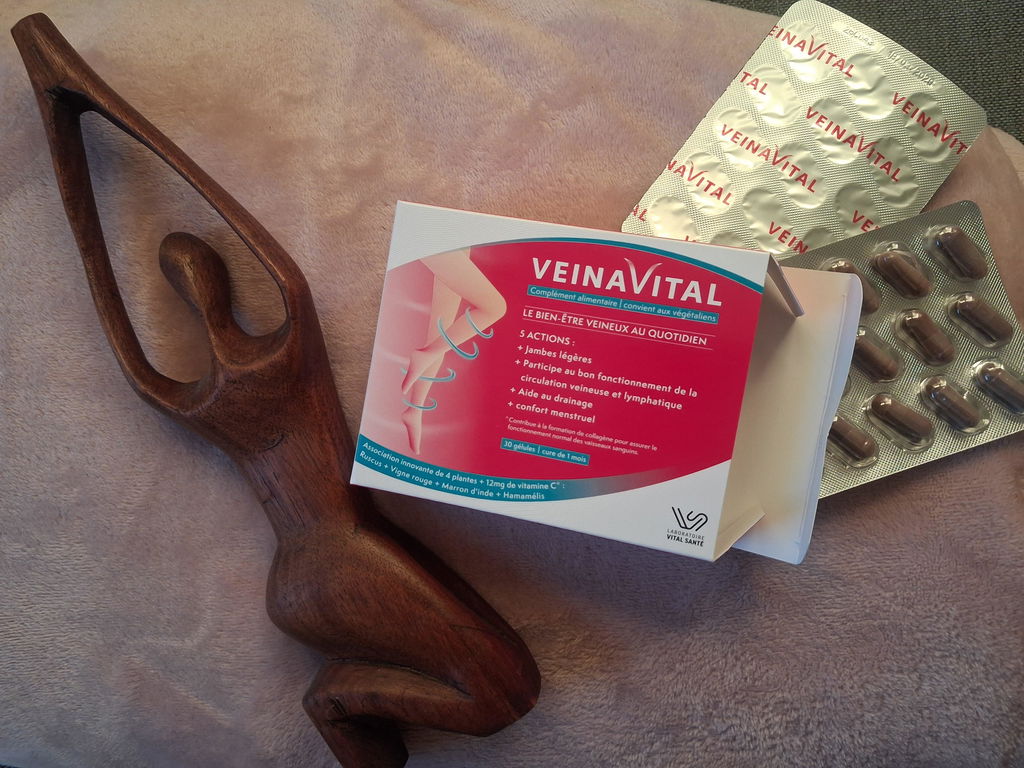
In this supportive context, Veinavital, our dietary supplement for circulatory comfort, has been formulated to support individuals prone to sensations of heavy legs. Its formula combines ruscus, red vine, horse chestnut, and witch hazel with vitamin C, which contributes to the normal formation of collagen necessary for the normal functioning of blood vessels. Taken once a day, it can be integrated into a routine that includes movement, hydration, and leg elevation. It does not replace medical compression when prescribed, nor a treatment or medical advice.
Can chronic venous insufficiency be cured?
No, not completely: the valves that have lost their effectiveness generally do not regain it. However, this does not mean that the progression is fixed. Early and appropriate management—combining physical activity, compression, medical follow-up, and, depending on the case, medicinal or interventional treatments—most often limits the worsening of symptoms, significantly improves daily comfort, and reduces the risk of long-term complications.
Reduced to a question of heavy legs or varicose veins, chronic venous insufficiency seems benign. However, when it becomes daily, it can affect much more than just the legs.
Fatigue at the end of the day is not just localized: perpetually heavy and painful legs make every movement more difficult and can contribute to general fatigue.
Standing for long periods—waiting in line, cooking, attending a concert, working several hours on your feet—gradually becomes uncomfortable, to the point that some people unknowingly change their habits to avoid these situations.
Sleep can be disturbed by nocturnal cramps, burning sensations, or an urge to move the legs, resulting in frequent awakenings and increased fatigue the next day.
Professional life is directly affected for professions requiring long periods of standing or sitting: teachers, caregivers, hairdressers, salespeople, waiters, cashiers, or office workers often feel the need to adjust their routine or take more breaks.
Physical activity, paradoxically, tends to decrease when legs become painful—even though movement is precisely what maintains the effectiveness of the muscle pump. This vicious cycle explains why it is generally preferable to adapt one's activity rather than stop it.
The psychological and aesthetic impact of varicose veins or visible small vessels should also not be minimized: discomfort wearing short clothes, reluctance to go to the beach or swimming pool, sometimes a loss of self-confidence—real consequences, even if they seem secondary compared to physical symptoms.
Travel, finally, sometimes becomes a source of apprehension after several hours of immobile travel—an inconvenience that a few simple habits (regular walking, hydration, compression) can usually limit.
Because it develops gradually, chronic venous insufficiency is often trivialized. However, as soon as it affects daily life, it deserves comprehensive management: beyond leg comfort, it is the overall quality of life that is at stake.
• Venous valve—a small membrane inside a vein that prevents blood from flowing backward due to gravity.
• Venous reflux—abnormal backward flow of blood when the valves no longer close properly.
• Chronic venous hypertension—sustained increase in pressure within the leg veins, causing most symptoms.
• Edema—swelling due to fluid accumulation in tissues.
• Telangiectasia—small dilated blood vessel, visible as a fine red or bluish line under the skin.
• Reticular venule—a small bluish vein, slightly larger than a telangiectasia.
• Varicose vein—a dilated and tortuous superficial vein, visible under the skin.
• Ochre dermatitis—brownish discoloration of the skin around the ankles, due to deposits of blood pigments.
• Lipodermatosclerosis—thickening and hardening of the skin and subcutaneous tissues, in an advanced stage of the disease.
• Venous ulcer—a chronic wound, most often near the ankle, that is difficult to heal.
• CEAP classification—international classification (Clinical, Etiology, Anatomy, Pathophysiology) used to describe the severity of venous disease, from C0 to C6.
• Venous echo-Doppler—ultrasound examination to visualize blood flow in veins and detect reflux.
• Venotonic—medication intended to relieve certain functional symptoms, such as heavy legs.
• Sclerotherapy—treatment involving injecting a substance into a vein to cause it to close.
• Superficial venous thrombosis (superficial phlebitis)—formation of a blood clot in a superficial vein.
• Deep vein thrombosis — formation of a blood clot in a deep vein, requiring urgent medical attention.
• Vascular specialist (angiologist) — specialist in diseases of the veins, arteries, and lymphatic vessels.
Is chronic venous insufficiency a serious disease?
It generally progresses slowly and, in the vast majority of cases, is not life-threatening. However, it can significantly impair quality of life and, without management, can progress to complications such as severe varicose veins, skin changes, or venous ulcers.
Can it be completely cured?
No: faulty valves usually do not regain their initial function. However, appropriate management can slow progression and permanently improve comfort — see the "How to relieve and treat" section.
Does it worsen with age?
Yes. The natural aging of tissues gradually reduces vein tone and valve efficiency, which explains the increasing frequency of the disease with age.
What is the difference between venous insufficiency and varicose veins?
Varicose veins are a possible consequence of chronic venous insufficiency, but not systematic: one can suffer from venous insufficiency without visible varicose veins, especially in the early stages.
Do heavy legs always mean venous insufficiency?
No, they can have other causes. But when they recur regularly, especially at the end of the day or in hot weather, venous insufficiency should be considered.
Why do legs swell more in the evening?
Throughout the day, gravity promotes blood accumulation in the legs. In affected individuals, less efficient venous return amplifies this phenomenon.
Why are symptoms more pronounced in summer?
Heat dilates veins, which makes valves less efficient and promotes blood stagnation — see the "Aggravating factors" section.
Can cold relieve legs?
Yes: it promotes slight vasoconstriction. A cool shower on the legs often provides a temporary feeling of relief.
What sports should be practiced, and which ones avoided?
Walking, swimming, cycling, aquagym, and gentle gymnastics are most beneficial for venous return. Running and weight training are not prohibited, but deserve to be adapted, especially in the presence of severe varicose veins.
How to wear medical compression?
Generally, compression stockings or socks are put on in the morning, before the legs start to swell, and removed in the evening. However, the duration of wear depends on each situation; it is advisable to follow the recommendations of the healthcare professional.
Does venous insufficiency promote cramps?
It can contribute to them in some people, but cramps have many other possible causes.
Is it hereditary, and are men affected?
Yes to both: family history is one of the main risk factors, and while women are more often affected, men also regularly develop venous insufficiency.
Does pregnancy promote venous insufficiency?
Yes: hormonal changes, increased blood volume, and pressure exerted by the uterus on certain veins explain this increased risk.
Can you fly with venous insufficiency?
Yes, by walking regularly in the aisle, mobilizing the ankles, hydrating well, and wearing medical compression if prescribed.
Do diet and hydration play a role?
A varied diet low in excess salt, as well as good hydration, contribute to good cardiovascular health and help maintain an adapted weight — without, by themselves, treating venous insufficiency.
Do overweight and smoking worsen the disease?
Yes to both: overweight increases the pressure on the leg veins, and smoking promotes inflammation and impairs the health of blood vessels.
Are massages and hot baths recommended?
Gentle massages, performed in the direction of venous return, can provide a feeling of comfort in some people. Very hot baths, conversely, are often less well tolerated, as heat tends to accentuate symptoms.
Can you wear heels?
Occasional wear is generally not problematic. However, very high heels worn daily can limit the effectiveness of the calf muscle pump.
When should you consult a doctor urgently?
In case of sudden swelling of one leg, severe pain, localized hot redness, a wound that does not heal, or sudden shortness of breath — see the complete list in the "Stages of venous insufficiency" section.
Can it disappear on its own?
No, it is a disease that generally progresses over the long term. However, appropriate management can relieve its symptoms and slow its progression.
Can you work standing with venous insufficiency?
Yes, but prolonged standing can accentuate symptoms. Walking for a few minutes regularly and following recommendations regarding medical compression can limit discomfort.
Can the appearance of varicose veins be prevented?
Not always, especially in the presence of a family predisposition. Remaining active, avoiding long periods of immobility, and maintaining an adapted weight can nevertheless limit their appearance or worsening.
What is the difference with lymphedema?
Venous insufficiency is related to poor blood return, while lymphedema results from dysfunction of the lymphatic system. Both can cause swollen legs, but their mechanisms and management differ.
Is it "water retention"?
Venous insufficiency can promote edema linked to increased pressure in the veins, sometimes equated with water retention — even if this term actually covers several different situations.
Are dietary supplements useful?
Some combine plants traditionally used to support circulation, such as red vine, butcher's broom, horse chestnut, or witch hazel. They do not replace prescribed treatments — see the "Natural solutions" section.
How long does it take to feel improvement?
This depends on the cause of the symptoms and the measures implemented: some people experience rapid relief thanks to walking or medical compression, others observe more gradual improvement.
Should you consult a vascular physician (angiologist) or a phlebologist?
The vascular physician (angiologist) is today the reference specialty for diagnosing and treating diseases of the veins, arteries, and lymphatic vessels.
This article is for informational purposes only and does not replace medical consultation. In case of persistent or unusual symptoms, consult a healthcare professional.